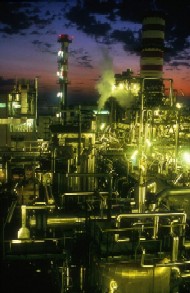
Wentworth Resources Raises $7.6 Million To Finance Tanzania�s Mnazi Bay Developments

Wentworth Resources has announced that it has successfully raised gross proceeds of USD 7.6 million (GBP 4.9 million, NOK 59.7 million) with institutional investors and certain Directors and members of the Executive Management through a private placement of 15,412,269 new shares.
The private placement saw no discount to market price with the new funds set to provide the Company with sufficient working capital beyond its projected receipt of first cash flow for gas sales from its Mnazi Bay concession.
This comes at a time when construction of the Government owned and operated Mtwara to Dar es Salaam pipeline is complete and the accompanying processing facilities are nearing completion with pre-commissioning activities ongoing with delivery of first gas into the new pipeline continues to be on track to commence in Q3 2015.
According to Wentworth Resources significant progress has been made in recent weeks on advancing payment guarantee arrangements and the Company is confident these will be completed prior to the delivery of first gas to the pipeline.
The company said it had preferred the Private Placement as it represented a quick and cost-effective method of raising funds necessary to give the Company sufficient working capital until projected cash flow from gas sales at Mnazi Bay commences.
FirstEnergy Capital and Stifel have been appointed as Joint Bookrunners in respect of the Placement.
According to Wentworth executive Chairman Bob McBean the Company expects to start receiving cash flow from gas sales to the new pipeline in Q4 2015.
“We are very pleased with the successful outcome of this raise which provides the working capital we need prior to delivery of first gas. We are confident that, with the support of our Partners and the commitment shown by the Government, gas will be on stream in the coming months and will be fully supported by an agreed payment guarantee arrangement. I and the Board would like to thank our existing shareholders for their continued support and welcome our new shareholders at an exciting period ahead for Wentworth,” says McBean.
In March Wentworth Resources announced that the Company has subsequently drawn an amount of $5.6 million on an existing $20 million credit facility with a Tanzania-based bank, TIB Development Bank Limited to finance Mnazi bay concession developments including drilling of the MB-4 development well.
As per the last evaluation gas reserves within the Mnazi Bay Concession in Tanzania, carried out by RPS Energy Canada Ltd put the value at $152.9 million after tax.
Marel et Prom is the operator at the Concession with 60.075 percent interest through exploration and 48.06 percent through production while the Tanzania Petroleum Development Corporation holds the remaining 20 percent.

Read more…

Orca contracts shallow-water rig for Songo Songo offshore Tanzania


DAR ES SALAAM, Tanzania – Orca Exploration Group has started the first phase of the Songo Songo development program offshore Tanzania.
This follows World Bank’s approval for International Finance Corp.’s (IFC) investment.
Orca has entered into a drilling contract with Paragon Offshore for the use of its M826 mobile drilling workover rig and associated services for the offshore phase of the Songo Songo gas field program.
The rig can operate in the shallow water operating environment around Songo Songo Island, which Orca describes as “somewhat unique.”  However, the company still needs to obtain certain regulatory and contractual approvals related to certain aspects of the development program.
Drilling should start between Aug. 1 and Sept. 21. The contract has a minimum 90-day duration.
Operations will likely include workovers (removal and replacement of production tubing strings) on the existing SS‑5, SS-7 and SS-9 wells, and drilling of one new well, SS-J. Orca has the option to drill a further two wells, pending the outcome of the workovers.

Read more…

Schlumberger Introduces Depth Domain Inversion Services

Schlumberger petro-technical experts use the services to improve the reliability and consistency of seismic structural and quantitative interpretation in complex environments.
“Conventional seismic inversion in the time domain introduces inconsistency between the seismic images and the rock properties, especially where there’s a significant overburden, such as subsalt,” said Maurice Nessim, president, Schlumberger PetroTechnical Services.
“With Depth Domain Inversion Services, customers receive more information derived from seismic data for reservoir characterization. This helps reduce uncertainty in complex reservoir environments, improve the confidence in prospect delineation, reservoir properties and volumetric calculations.”
Performing seismic inversion in the depth domain fully integrates the inversion with the imaging products to improve the reliability of estimating rock properties for reservoir characterization. This is done by correcting for depth space and dip dependent illumination effects during seismic amplitude inversion directly in the depth domain.
depth domain inversion services
Depth Domain Inversion Services have been successfully applied in complex geological environments in North and South America. In the Green Canyon area of the Gulf of Mexico, Schlumberger petrotechnical experts used a Depth Domain Inversion workflow in a complex subsalt area that was poorly illuminated.
Reverse time migration produced seismic amplitudes adversely imprinted by the illumination effects. Executed in the Petrel E&P software platform, the workflow improved structural and quantitative interpretation, corrected illumination effects and provided a much sharper reflectivity image for better event continuity, more reliable seismic amplitudes and a higher fidelity acoustic impedance volume

Read more…

Wentworth Resources Estimates $3.5m in Tanzania Monthly Gas Sales


Wentworth Resources says it estimates that monthly gas sales in Tanzania into new government owned pipeline Q3 2015 could reach an estimated $3.5m monthly.
Initially Mnazi Bay will be the only supplier of gas in Tanzania into new pipeline from 5 wells which will be producing in the field by Q3 2015 at initial volumes of 80 mmscf/d escalating to 130mmscf/d in 2016
Wentworth adds that the substantial cash flow generation is expected to commence in Q4 with the plan being to reinvest cash flows into Mnazi Bay and grow the business by maximizing production from existing discovered gas fields to meet the growing demand for gas in Tanzania and examining more drill exploration prospects.
Already the company has identified six exploration targets with 1.5 Tscf (614 Bscf Wentworth’s share) unrisked P50 Prospective Resources with all costs recoverable against existing and future production within the Concession
On the way forward Wentworth says it will continue to focus on East Africa onshore and near shore,  pursue acreage along pipeline route in Tanzania, evaluate Tembo-1 discovery Onshore Rovuma for potential appraisal and Expand operations in East Africa.
As per the 17 year term gas sales agreement with the government the government is responsible for transportation and processing costs and payment guarantees are nearing finalization.
As per the last independent evaluation of its gas reserves within the Mnazi Bay Concession in Tanzania, carried out by RPS Energy Canada Ltd the value of Wentworth Resources at Mnazi Bay is set at$152.9 million after tax. RPS Energy also placed the value of the entire field at 443Bscf (2P) equivalent to 73.8MMboe.
Wentworth holds a substantial 31.94 percent withholding interest in production equivalent to 141.5Bscf (2P) gross reserves.
In October 2014 Wentworth Resources estimated its projects in Tanzania would make $20 million for first full year and $140 million over first 5 years of production net of operating and on-going development costs according to the October 2014 presentation.
Wentworth holds 31.94% in the production stage down from 39.925%  while the operator and  Mnazi Bay Partner Maurel et Prom holds 48.06% down from 60.075% after the Tanzania Petroleum Development Corporation backed in to take 20% of production interests.

Read more…

Opportunities in East Africa as region enters Production Development Phase

Four East Africa countries among them Mozambique, Tanzania, Uganda and Kenya are headed to the development phase as they draw closer to exploit their oil and natural gas reserves providing an opportunity for investors to dive in and benefit from the projects worth billions of dollars.
According to George Wachira working with Petroleum Focus Consultants this phase provides opportunity for players in various fields including engineering, logistics and field services, financial services, materials supply amongst others.
On the engineering and construction field Wachira sees the greatest opportunity for local large mature contractors who can bid directly and participate in the projects independently.
“Some experience has been achieved through the ongoing exploration activities,” says wachira.
For smaller engineering and construction firms the opportunity is in forging partnerships especially with oversees firms who can transfer their expertise and technology.
Wachira says that whereas various contracts will fall to international firms with years of experience in this sector there will be increased use of local subcontractors even as he urges local firms to seek training and certification.
The sheer amount of materials needed will drive up demand for logistics and field services even as there is expected to be the commencement of development drilling.
Total Uganda which is awaiting a production license for example estimates that it will need to move over 800000 tonnes of equipment as it starts development at Hoima which would mean about 1000 trucks a day during the period in both Kenyan and Ugandan road.
Already a number of local companies have already dominated this space including the first listing by an oil and gas company on the Nairobi bourse.
There is also hope especially by local companies that they will receive government protection  in the supply of materials that are readily available locally the a local content legislation.
“The early enactment of local content regulations shall empower local businesses,” he says.
Other opportunities are in the financial services segment where banks, insurance and guarantees  with various local institutions having already entered this space.
Last week Chase bank announced that it would be providing $50 million to small and medium enterprises wishing to venture into the oil and gas sector.
The financing of SMEs to venture into what has so far been viewed as an closed society has for long being identified  as a major barrier to local participation alongside the enactment and operationalization of the local content legislation.

Read more…

Orca contracts shallow-water rig for Songo Songo offshore Tanzania

DAR ES SALAAM, Tanzania – Orca Exploration Group has started the first phase of the Songo Songo development program offshore Tanzania.
This follows World Bank’s approval for International Finance Corp.’s (IFC) investment.
Orca has entered into a drilling contract with Paragon Offshore for the use of its M826 mobile drilling workover rig and associated services for the offshore phase of the Songo Songo gas field program.
The rig can operate in the shallow water operating environment around Songo Songo Island, which Orca describes as “somewhat unique.”  However, the company still needs to obtain certain regulatory and contractual approvals related to certain aspects of the development program.
Drilling should start between Aug. 1 and Sept. 21. The contract has a minimum 90-day duration.
Operations will likely include workovers (removal and replacement of production tubing strings) on the existing SS‑5, SS-7 and SS-9 wells, and drilling of one new well, SS-J. Orca has the option to drill a further two wells, pending the outcome of the workovers.

Read more…

Maurel et Prom reports Promising results of the MB-4 development well in Tanzania

Manzi Bay operator Maurel et Prom has announced that the MB-4 development well, drilled 800 m from the MB-2 and MB-3 wells at the Mnazi Bay gas field, has crossed Miocene gas reservoirs with net pay of 24 metres (Upper Mnazi Bay) and 43 metres (Lower Mnazi Bay) respectively, both ranked among the best of the five wells drilled at this field so far.
According to Maurel et Prom pressure measurements have confirmed the lateral and the vertical connectivity of each reservoir with the two reservoirs having been selectively tested at different two-hour stabilised flows, with the following results:
MB-4
The well will be connected to the production faculties currently being installed at the field, for start-up in the third quarter of 2015. MB-4 well deepening to the Oligocene was interrupted after encountering high-pressure intervals of unknown origin.
Maurel et Prom adds that the well’s results confirm the Group’s ability to produce additional output over and above the initial 80 MMscfd, to deliver 110 to 130 MMscfd and based on these results and on the initial production scheduled for third quarter 2015, the next assessment of reserves at the Mnazi Bay field should confirm the previously accepted gas volumes.
The MB-4 development well spud in March and is ongoing with drilling operations expected to be completed in 90 days.

Read more…

International Trade Exhibition and Conference on oil & gas

About International Trade Exhibition and Conference on oil & gas:
The first Oil & Gas Africa - Int'l Trade Exhibition, will be held from the 27th to the 29th of August 2015. This event will be the hub for key players in the Oil and Gas industry, attracting leading oil, gas and petroleum companies from around the world.


27 Aug 15, 08:00 AM To 29 Aug 15, 06:00 PM

Dar Es Salaam

Location/Directions:
Mlimani Conference Center

Read more…

THESE ARE PETROLEUM INDUSTRY ACTIVITIES

Industry activities include:

1.Exploration

2.Drilling

3.Field activities

4. Recovery – 3 stages (primary, secondary and enhanced oil recovery). The three stages of recovery may take 30 to 40
years to complete

5. Water disposal

6. Refining and marketing

7. Transportation

8. Expansion and contraction of plants, buildings and equipment

9. Preventive maintenance and safety

10. Major renovations, upgrading and replacement of facilities

Read more…

TPDC waanza kutafiti gesi, mafuta Mkinga

SHIRIKA la Maendeleo ya Petrol nchini, TPDC limeanza utafiti wakijiolojia wa utafutaji mafuta na gesi katika vijiji vya Gombero mkoani Tanga.

Kutokana na hilo shirika hilo limeanza kutekeleza mradi wa uchongaji wa mashimo mafupi,visima vifupi kumi kwa ajili ya shughuli hiyo ya utafiti. Mradi huo unafanywa na kumilikiwa TPDC kwa asilimia 100.

Akizindua mradi huo Mgeologia, Amina Kagera alisema lengo kubwa la mradi huo ni kuwapa mafunzo wataalam vijana wa TPDC kwa kuwatumia wataalam wa ndani ya shirika waliobobea.

Alisema fursa  hiyo itawapa hamasa vijana kufanya tafiti mbalimbali nchini lengo likiwa ni uendelezaji wa utafutaji wa mafuta na gesi kwa faida ya watanzania wote.

"Mradi huu ulianza rasmi mwaka 2010 ukiwa na malengo ya kuwajengea uwezo wataalam wa sayansi ya utafutaji wa mafuta na gesi ambao hawakuwa na msingi wa taaluma ya kijiolojia kama wale wa fani ya jiofizikia na uhandisi"alisema Kagera

Kagera alisema mradi huo unahusisha wataalam wa kukusanya sampuli za jiolojia,jiokemikia na kuchambua sampuli, kufanya tafiti mbalimbali kuhusisha sampuli hizo na utengenezaji wa ramani za kijiolojia katika maeneo husika.

Alisema pia utaongeza thamani katika mabonde ya Tanzania ambapo shughuli za utafutaji wa mafuta na gesi hufanyika.

"Mwaka 2012 hadi 2013 baada ya kazi za vitendo katika maeneo ya Kakindu na Mto kibindo karibu na bwawa la Nairobi,Gombero Mkoani Tanga wataalam waligundua uwepo mkubwa wa miamba tabaka aina ya Shalena,Silti Shale na makaa ya mawe" alisema Kagera

Naye Mkurugenzi wa Utafiti, Emma Msaky alisema malengo makuu ya mradi huo ni kuzidi kuyaanisha maeneo ya utafutaji wa mafuta na gesi ili kujua uwepo wa miamba ya uzalishaji wa nishati hizo.

Alizitaja gharama za uchorongaji wa mashimo hayo na visima hivyo vifupi ni takribani dola za Kimarekani 195,000 ambapo fedha zote hulipwa na TPDC kutoka kwenye mfuko wake wa fedha za miradi ya maendeleo.

Read more…

3rd TANZANIA OIL AND GAS SUPPLIERS CONFERENCE


Welcome to the 3rd TANZANIA OIL AND GAS SUPPLIERS CONFERENCE on
11th - 12th June 2015, HYATT REGENCY KILIMANJARO

Tanzania Oil and Gas Suppliers Conference (TOGSC) is a conference cum exhibition that will bring together key players from the supply chain together with stakeholders from the government and the oil and gas industry to discuss and engage on the different opportunities and challenges within the East Africa Scenario particularly Tanzania.
This conference that will incorporate suppliers within the oil and gas industry is a strategic event that has come at the right time considering the recent large and world class deposits of oil and gas in Mtwara and Lindi with potential for more to be discovered.
Within this new burgeoning oil and gas industry there is a need to bridge the gap of the supply chain between the suppliers/ service providers and the oil and gas industry Stakeholders. The conference will give suppliers especially the local Tanzanian suppliers the channels and means to harness and cater for this massive industry.
TOGSC is aimed at being the ultimate link between the Supply Chain and the stakeholders in the Oil and Gas Industry in Tanzania by empowering and building capacity. The outcomes of this conference shall assist the government in creating policies that favour the supply chain amidst them being able to be competitively being able to meet the need of the stakeholders on the Oil and Gas industry in Tanzania.
TOGSC networking events offer the opportunity to develop and strengthen your business relationships. If you’re in the Oil and Gas industry then this is a great platform for you to meet your peers – These events are attended by visitors, conference delegates and exhibitors alike.
2015 SPEAKERS
  • David L. Ross, 
    Managing director,Statera Capital Limited.
  • Mr. Richard Kasesela, 
    Chairman Mining Advisory Board,Ministry of Energy and Mineral of the United Republic of Tanzania
  • Mr. Nestory Phoye,Managing Director,Proactive Solutions (T) Ltd
  • Dr. Camillus D. N. Kassala, Lecturer & Dean of Students,Eastern Africa Statistical Training Centre
  • Mr. Peter Baziwe,Information Systems Audit and Security professional, ISACA Tanzania Chapter


Read more…

Statoil has made a new gas discovery in Tanzania.


The Norwegian company said the Mdalasini-1 exploration well had resulted in the new find.

The discovery of an additional 1.0-1.8trillion cubic feet (tcf) of natural gas in the well brings the total of on-place volumes up to approximately 22 tcf in Block 2.

Nick Maden, senior vice president for Statoil’s exploration activities in the Western Hemisphere, said: “The Mdalasini-1 discovery marks the completion of the first phase of an efficient and successful multi-well exploration programme offshore Tanzania.”

“Since the start of the programme in February 2012, we have drilled 13 wells and made eight discoveries, including Mdalasini-1. We still see prospectivity in the area, but after appraising the Tangawizi-1 high-impact discovery, which was made in March 2013, there will be a pause in the drilling to evaluate the next steps and to mature new prospects.”

Statoil has drilled the Mdalasini-1 well with 100% working interest.

The Mdalasini-1 discovery is located at a 2,296-metre water depth at the southernmost edge of the block. The new gas discovery has been made in Tertiary and Cretaceous sandstones.

Previously Statoil and ExxonMobil made seven discoveries in Block 2, including the five high-impact gas discoveries Zafarani-1, Lavani-1,Tangawizi-1, Mronge-1 and Piri-1, as well as the discoveries in Lavani-2 and Gilligiliani-1.

Statoil operated the licence on Block 2 on behalf of Tanzania Petroleum Development Corporation (TPDC) and has a 65% working interest.

ExxonMobil Exploration and Production Tanzania Limited holds the remaining 35%. TPDC has the right to a 10% working interest in case of a development phase. Statoil has been in Tanzania since 2007, when it was awarded the operatorship for Block 2. ~ energyvoice.com

Read more…

FACTS FOR NATURAL GAS

  •   Source: ChevronTexaco Corporation
  • Natural gas comes from two sources:

  1. From source rocks rich in organic material from plants.
  2. From normal oils converted to gas due to excessive heat from deep burial.

  • Natural gases fall into two categories:

  1. Combustible (methane, ethane, propane, butane, & hydrogen). Methane is the most abundant, comprising almost 80% of combustible gases. There are two types of combustible gas: dry gas (usually from rock sources and exposure to thermal and bacterial conditions) and wet gas (contains higher hydrocarbons and is generally associated with oil accumulations). 75% of gas resources are combustible.
  2. Non-combustible (nitrogen, carbon dioxide, & hydrogen sulfide).

  • Gas source rocks are more widespread and abundant than oil source rocks.

  • Gas is being depleted at a much slower rate than oil due to the high cost of transporting gas (especially from remote areas).

  • As much as 80% or more of gas is recoverable from a well/source versus about 50% of oil since oil tends to adhere to the sand grains in the formation.

  • Gas is commonly re-injected into oil wells to maintain pressure and enhance oil production. Once oil production falls to a low level, many then convert the oil field into a gas field.


Natural Gas Basics


Natural gas and crude oil are called hydrocarbons because both are composed of carbon and hydrogen atoms. Natural gas molecules are generally shorter; four carbon atoms or less. Crude oil molecules contain five or more carbon atoms per molecule.

Natural gas is both a clean burning fuel source and the primary feedstock into the U.S. petrochemical industry. Raw natural gas in fields is processed to separate the methane out from butane, propane, and large amounts of ethane. The three heavier liquids are prone to condensation in natural gas pipelines.

Natural Gas Liquids and Petrochemicals


Methane - One carbon atom; chemical formula CH4. The principal use of methane is as a fuel. The natural gas that is delivered to your home is almost pure methane. Methane is also an upstream component of many important industrial chemicals:


  • Methanol - A primary raw material in automotive windshield wash and also used as a racing fuel. Chemical derivatives of methanol also play an important role in our everyday lives:


Ethane - Two carbon atoms; chemical formula C2H6. Ethane is the second-largest component of natural gas, typically comprising up to 6% of the volume of gas produced from a natural gas field.


  • Ethylene - The vast majority of ethane is consumed in the production of ethylene by steam cracking. Consumer products made from ethylene derivatives represent a large part of the petrochemical industry here in the U.S.:


Propane - Three carbon atoms; chemical formula C3H8. Truck fleets, forklifts, barbecue grills, portable stoves and even the new Roush Ford F-150 pick-up use propane fuel. Propane's octane rating is noticeably higher than gasoline at 110.

Many homes not connected to municipal (methane) gas pipelines use propane for their appliances and furnaces. Other fuel uses for propane:


  • Refrigerators.
  • Flamethrowers.
  • Hot air balloons.
  • Fuel for explosions and other special effects in theme parks and movies.
Butane - Four carbon atoms; chemical formula C4H10. Primary fuel uses for butane are:


  • Bottled fuel for cooking and camping.
  • Fuel for cigarette lighters.
  • A propellant in aerosol sprays.
  • As refrigerants.

Natural Gas Quality

Gas quality standards vary depending on the pipeline system and are usually a function of each pipeline system's design and the markets that it serves. In general, the standards specify that the natural gas be within a specific range of heating value. In the U.S., gas must generally be should be 1.035 MMBtu per cubic foot of gas at 1 atmosphere and 60 °F.

Sour Gas - Natural gas that contains detectable amounts of hydrogen sulfide (H2S) is called sour gas. It's a poisonous gas that is also very corrosive. Hydrogen sulfide must be removed from raw gas by rather expensive equipment at the well site to prevent corrosion damage to well site pipes and equipment as well as to meet utility pipeline gas specs. As H2S is particularly dangerous to humans, a typical pipeline limit for hydrogen sulfide would be in the range of 4 parts per million per 100 standard cubic feet.

Sweet Gas - Natural gas that does not contain hydrogen sulfide is considered sweet gas.

Wet Gas - Wet gas is natural gas that contains naturally liquid hydrocarbons (called "condensate") with the chemical composition of gasoline. Refineries pay a slightly lower price for condensate than they do for crude oil because the octane of condensate is very low.

Read more…

REVEALED:Why the oil price is falling


THE oil price has fallen by more than 40% since June, when it was $115 a barrel. It is now below $70. This comes after nearly five years of stability. At a meeting in Vienna on November 27th the Organisation of Petroleum Exporting Countries, which controls nearly 40% of the world market, failed to reach agreement on production curbs, sending the price tumbling. Also hard hit are oil-exporting countries such as Russia (where the rouble has hit record lows), Nigeria, Iran and Venezuela. Why is the price of oil falling?
The oil price is partly determined by actual supply and demand, and partly by expectation. Demand for energy is closely related to economic activity. It also spikes in the winter in the northern hemisphere, and during summers in countries which use air conditioning. Supply can be affected by weather (which prevents tankers loading) and by geopolitical upsets. If producers think the price is staying high, they invest, which after a lag boosts supply. Similarly, low prices lead to an investment drought. OPEC’s decisions shape expectations: if it curbs supply sharply, it can send prices spiking. Saudi Arabia produces nearly 10m barrels a day—a third of the OPEC total.
Four things are now affecting the picture. Demand is low because of weak economic activity, increased efficiency, and a growing switch away from oil to other fuels. Second, turmoil in Iraq and Libya—two big oil producers with nearly 4m barrels a day combined—has not affected their output. The market is more sanguine about geopolitical risk. Thirdly, America has become the world’s largest oil producer. Though it does not export crude oil, it now imports much less, creating a lot of spare supply. Finally, the Saudis and their Gulf allies have decided not to sacrifice their own market share to restore the price. They could curb production sharply, but the main benefits would go to countries they detest such as Iran and Russia. Saudi Arabia can tolerate lower oil prices quite easily. It has $900 billion in reserves. Its own oil costs very little (around $5-6 per barrel) to get out of the ground.
The main effect of this is on the riskiest and most vulnerable bits of the oil industry. These include American frackers who have borrowed heavily on the expectation of continuing high prices. They also include Western oil companies with high-cost projects involving drilling in deep water or in the Arctic, or dealing with maturing and increasingly expensive fields such as the North Sea. But the greatest pain is in countries where the regimes are dependent on a high oil price to pay for costly foreign adventures and expensive social programmes. These include Russia (which is already hit by Western sanctions following its meddling in Ukraine) and Iran (which is paying to keep the Assad regime afloat in Syria). Optimists think economic pain may make these countries more amenable to international pressure. Pessimists fear that when cornered, they may lash out in desperation.

Read more…

Mishahara Mipya Inayopendekezwa TPDC

Hiyo ndio Mishahara mipya inayopendekezwa shirika la mafuta Tanzania (TPDC)

Read more…

Unajua Kazi Ya Petrolum Gelogist Kwenye Oil Company..? Bofya Hap

What they do all day? A petroleum geologist works with oil companies to figure out where oil deposits are and whether it's worth tapping into them. Using high-tech machinery like seismic X-rays, they may even determine where a drill should be placed to find oil deposits underground

Read more…

MPYA KABISA :OIL AND GAS COMPANY GRADUATE JOB

BG Group2015 Graduate Development Programme is open. Visit the BG careers website for more details.
BP Graduate SchemeThe 2015 Graduate and Intern application process will open in September 2014. Visit the BP careers website for more details.
ChevronChevron Upstream Europe (based in Aberdeen) provides graduate opportunities in the areas of drilling and completions engineering, subsea engineering, process engineering, mechanical engineering, petroleum engineering, geology and geophysics. Visit the Chevron careers website for more details.
ConocoPhillipsSearch for opportunities on the ConocoPhillips graduate careers website.
ExxonFor details of current graduate opportunities visit the ExxonMobil UK/Ireland Recruitment Centre or the geoscience careers website.
MaerskMaersk hire candidates throughout the year for their 2 year graduate programme. More details are available on the Maersk careers website.
ShellOpportunities will be advertised on the Shell careers website.
StatoilVisit the Statoil careers website for more details.
TotalDetails of the graduate opportunities for 2015 will appear on the Total graduate recruitment webstie around October 2014.

Service Company Graduate Job Opportunities

HalliburtonVisit the Halliburton graduate careers website for opportunities in Engineering, Chemistry and Geology
Baker HughesBaker employ 57,000-plus people in more than 80 countries, setting new standards of excellence in drilling and evaluation, completions and production, fluids and chemicals, and reservoir analysis. To find out more about a career with Baker Hughes visit their graduate recruitment website.
SchlumbergerGraduate opportunities in engineering, research, geoscience and petrotechnical disciplines. Visit the Schlumberger careers website for details.

Read more…

HATUA ZA UPATIKANAJI WA MAFUTA NA GESI (STAGES TO GET OIL AND GAS)


In a Lyfe cycle of oil field there are various stages to obtain oil and gas which include the following

Step 01: Exploration
In this stages Petroleum Geoscientists and engineers work together to locate and drill into Location where they think will produce oil. In this stage they look first at surface and then into subsurface

At Surface: They look for sedimentary basin and they use the knowledge they know about rock properties to make choices, they look  seeps, study rock and outcrop

In the Subsurface:They based on tool like magnetometer gravimeter, their main objective is to find location of sedimenatry rock where they cabn study further

One they found sedimentary basin then they conduct seismic survey to identify structure that may contain oil and gas

After finding Traces of oil and gas the next step is

Step 02:Appraisal
They evaluate the potential commercial of oil and gas. In doing so they determine how much oil and gas are present and type of oil and gas Present. They calcuate if there is suffient hydrocarbons to justify further investment.They determine if the field will produce enough oil to help to recover all the costs and still make profit.

If they determine there enough Petroleum they move to the next step

Step 03:Development
They select where well to be drilled and they plan budget equipment, tool and Manpower needed to bring Field into Production


Step 04:Production
At this where field start to produce oil and gas.This is the only stage that make money. It can take few years to decades depend on the size of the field

Step 05:Abandonment
When there is no enough hydrocarbon enough to make profit the well will be shut down.


Final words

If you have anything about these stages of getting Petroleum Please share with us


Read more…

KITABU STRUCTURE GEOLOY FOR PETROLEUM GEOSCIENTIST (FREE DOWNLOAD)

In Petroleum industry people look For structure because is where hydrocarbon can accumulate. Kwa hiyo kitabu hiki kitakusaidia kujua structure muhimu katika utafiti wa mafuta na gesi.

Kusoma na Kudownload kitabu hiki bonyeza maandishi haya.structure gology for peroleum geoscientist

Read more…

GOVERNMENT SCHOLARSHIPS TENABLE IN THE REPUBLIC OF KOREA FOR THE YEAR 2015

The Ministry of Education and Vocational Training is inviting application from qualified Tanzanians for the undergraduate degree programme (hereafter called 2015 undergraduate GKS”)   to be conducted in the Republic of Korea for the academic year 2015- 2020
Qualifications
Prospective candidates must meet the following qualifications:-
·   Applicants must have passed their Advanced Certificate of Secondary Education Examination with an average of B+ grade or above;
·   Applicants must not be older than 25 years by March, 1st , 2015; and
·   Applicants must not at any time have ever received Korea Government Scholarship for undergraduate studies

Mode of Application
(a)   All application should be made using application forms from the Websitehttp://www.studyinkorea.go.kr;
(b)   Applicants can apply for all other programmes except those which are exceeding four years duration (eg. medicine, dentistry, pharmacy, architecture etc); and
(c)    Application forms should be filled as per guidelines and be attached with all necessary attachments as stipulated in the checklist.
Completely filled application forms should be submitted to the address below before 15thOctober, 2014

The Permanent Secretary,
Ministry of Education and Vocational Training,
P.O. Box 9121,
DAR ES SALAAM
Moe.go.tz

Read more…